

The best synonyms for grateful are thankful, appreciative, obliged, indebted, and gratified. All of them express thanks, but each carries a different level of warmth, formality, and obligation. Choosing the right one helps your message sound natural, whether you are writing to a manager or a close friend. This matters because the wrong word can sound too cold or too dramatic.
This guide explains what grateful means, why alternatives are useful, and how to use 30 options in real sentences. You will also find advice on tone, common mistakes, antonyms, and a quick reference table, so you can choose the right word for emails, speeches, thank-you cards, and everyday conversation.
What Does “Grateful” Really Mean?
Grateful is an adjective. It describes a feeling of warm appreciation toward a person who has helped you, or toward a favorable situation. It comes from the noun gratitude.
The word usually takes the preposition “for” before the thing you appreciate and “to” before the person.
- I am grateful for your advice.
- She was grateful to her neighbor for the help.
It works in formal and informal writing, which explains why it is so common.
Why Look for Alternatives to “Grateful”?
Repeating one word makes writing flat, especially in emails, cover letters, speeches, and cards. A different word can also match your exact feeling.
- Some words show strong emotion, such as overwhelmed or moved.
- Some suit professional settings, such as appreciative or obliged.
- Some focus on good luck rather than thanks, such as fortunate or blessed.
- Some are casual, such as glad or lucky.
Not every word below is a perfect synonym. Several are near-synonyms that overlap with grateful in certain contexts, and the notes point this out.
30 Synonyms for “Grateful” and How to Use Them
Thankful
Thankful is the closest everyday match. It is simple, warm, and suitable almost anywhere.
Example: We are thankful for your quick response.
Appreciative
Appreciative shows that you recognize the value of someone’s effort. It sounds polished and works well in business writing.
Example: The team is appreciative of your guidance.
Indebted
Indebted suggests you owe someone a debt of thanks, often for a significant favor. It is a strong word.
Example: I am indebted to my teacher for her patience.
Beholden
Beholden means feeling obligated to someone because of what they have done for you. It can sound heavy or even negative, so use it carefully.
Example: He did not want to be beholden to anyone.
Obliged
Obliged is formal and slightly old-fashioned when used for thanks. It also means “required,” so context matters.
Example: I am much obliged for your help.
Gratified
Gratified means pleased and satisfied, often by a result you hoped for. It is a near-synonym rather than a direct match for grateful.
Example: She was gratified by the warm reception.
Touched
Touched describes being emotionally affected by someone’s kindness.
Example: I was touched by your thoughtful message.
Moved
Moved is stronger than touched. It suggests deep emotion, often in response to generosity.
Example: He was moved by the community’s support.
Humbled
Humbled combines thanks with modesty. People often use it after receiving praise or an award.
Example: I am humbled by this recognition.
Blessed
Blessed expresses thanks for good fortune. It often has a spiritual tone, though many people use it casually.
Example: I feel blessed to have such supportive friends.
Pleased
Pleased is mild and polite. It shows satisfaction but not deep thanks, so it works best in formal replies.
Example: We are pleased with the assistance you provided.
Content
Content means quietly satisfied. It is a near-synonym that suits a peaceful appreciation of what you have.
Example: She felt content with her simple life.
Fortunate
Fortunate points to good luck or favorable circumstances rather than thanks to a person.
Example: I am fortunate to work with a great team.
Honored
Honored mixes gratitude with pride, especially when you are recognized or invited.
Example: I am honored to accept this invitation.
Delighted
Delighted shows great pleasure. It adds enthusiasm to a thank-you.
Example: We were delighted by your generous gift.
Overjoyed
Overjoyed describes extreme happiness. It suits personal and emotional moments.
Example: They were overjoyed by the surprise party.
Relieved
Relieved shows freedom from worry. Thanks is implied when someone has solved a problem for you.
Example: I was relieved when you offered to help.
Glad
Glad is a short, informal word for pleasure. It is friendly but light.
Example: I am glad you could join us.
Privileged
Privileged expresses thanks for a special advantage or opportunity.
Example: I feel privileged to learn from you.
Lucky
Lucky is casual and focuses on chance. It does not directly thank anyone.
Example: I am lucky to have you as a friend.
Full of Gratitude
This phrase is clear and emotional. It suits cards, speeches, and heartfelt messages.
Example: I am full of gratitude for your kindness.
Deeply Appreciative
Adding “deeply” raises the intensity while keeping a professional tone.
Example: We are deeply appreciative of your continued support.
Forever Grateful
Forever grateful signals lasting thanks for something life-changing. Use it sparingly so it keeps its weight.
Example: I will be forever grateful for your encouragement.
Overwhelmed with Gratitude
This phrase shows that the kindness was larger than you expected.
Example: She was overwhelmed with gratitude after the donations arrived.
Filled with Appreciation
This is a warm, polished phrase that fits letters and speeches.
Example: I am filled with appreciation for everything you have done.
Warmed by Your Kindness
This is a gentle, descriptive phrase for cards and personal notes.
Example: I was warmed by your kindness during a hard week.
Truly Thankful
Truly adds sincerity to a simple word, and it works in nearly any setting.
Example: We are truly thankful for your time.
Eternally Grateful
Eternally grateful is a dramatic version of forever grateful. Reserve it for major favors.
Example: I am eternally grateful for the second chance.
Beyond Grateful
Beyond grateful is an informal, modern phrase for thanks too big for ordinary words.
Example: We are beyond grateful for the community’s response.
Appreciatory
Appreciatory is a rare word that means expressing appreciation. Most writers choose “appreciative” instead, and appreciatory can look unusual in professional writing.
Example: The audience gave an appreciatory nod.
Which Alternative Fits Best?
The right word depends on tone, audience, and the strength of your feeling. Ask who will read the message and how close you are to them.
Highly Grateful Synonyms
For strong thanks, choose deeply appreciative, indebted, overwhelmed with gratitude, or eternally grateful. Match the strength to the favor, because exaggeration sounds insincere.
I Am Grateful Synonyms
You can replace “I am grateful” with “I am thankful,” “I appreciate,” “I am obliged,” or “I am touched.” Each keeps the first-person voice and changes only the emotional shade.
Professional Synonyms for Grateful
In business writing, appreciative, obliged, and honored sound polished. Avoid casual choices such as lucky or glad in formal letters.
Example: I am appreciative of the opportunity to interview.
Happy and Grateful Synonyms
When thanks comes with joy, use delighted, overjoyed, pleased, or glad. These words show a happy reaction as well as appreciation.
Another Word for Grateful and Blessed
Fortunate, privileged, and thankful pair naturally with blessed. They stress good fortune and are less religious in tone.
Grateful Antonyms
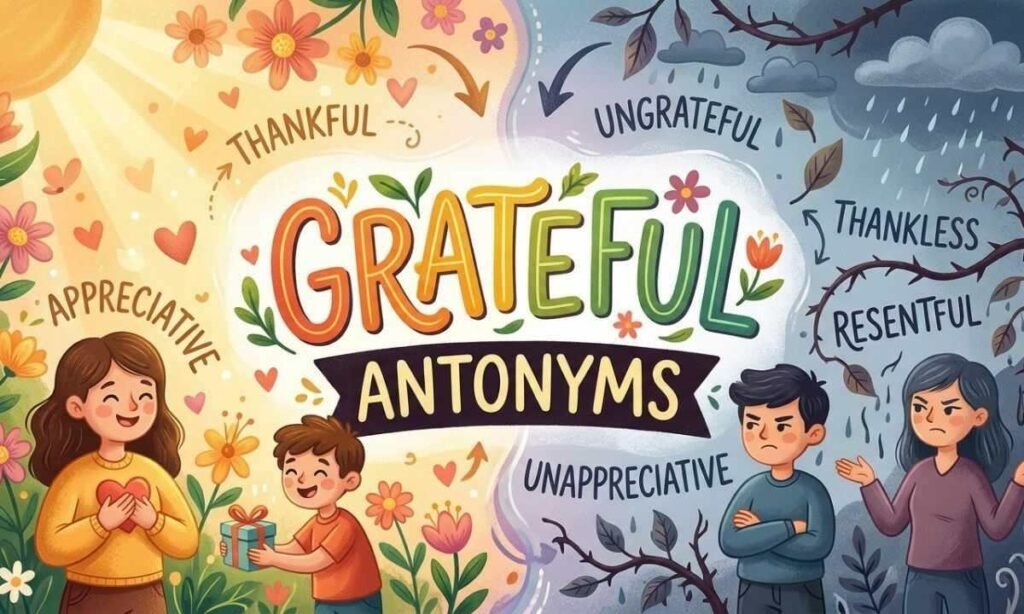
The opposite of grateful is ungrateful. Other antonyms include unappreciative, unthankful, and ungracious.
- Ungrateful: She seemed ungrateful for the gift.
- Unappreciative: The manager was unappreciative of the extra effort.
- Ungracious: He gave an ungracious reply to the compliment.
The word “thankless” mostly describes a task that earns no thanks, as in “a thankless job.” It is less common for describing a person.
Common Mistakes
- Wrong preposition. Incorrect: I am grateful of your help. Correct: I am grateful for your help. Use “for” before the thing and “to” before the person.
- Treating every word as identical. Incorrect: I am content to receive your gift. Correct: I am grateful to receive your gift. Content describes calm satisfaction and does not carry thanks.
- Using “obliged” without context. “Obliged” can also mean required, so “I was obliged to attend” has a different meaning from “I am obliged for your help.”
- Overusing dramatic phrases. “Eternally grateful” for a small favor sounds exaggerated. Choose thankful or appreciative instead.
- Swapping “indebted” and “thankful” freely. Indebted implies you owe something in return, while thankful does not.
Quick Guide Table
| Word or Phrase | Tone | Best Use | Example |
| Thankful | Neutral | Everyday thanks | I am thankful for your help. |
| Appreciative | Professional | Emails, reviews | We are appreciative of your support. |
| Indebted | Strong, formal | Major favors | I am indebted to you. |
| Obliged | Formal | Polite replies | I am much obliged. |
| Touched | Emotional | Kind gestures | I was touched by your note. |
| Honored | Formal, proud | Awards, invitations | I am honored to attend. |
| Blessed | Warm, spiritual | Personal reflection | I feel blessed to know you. |
| Forever Grateful | Intense | Life-changing help | I am forever grateful. |
Frequently Asked Questions
What is the best synonym for grateful?
Thankful is the closest and most versatile synonym. For professional writing, appreciative is often the better choice.
What is a professional synonym for grateful?
Appreciative, obliged, and honored suit professional settings. Each sounds polite without being overly emotional.
What is the difference between grateful and thankful?
They are almost interchangeable. Grateful often suggests a deeper, more lasting appreciation, while thankful can also describe relief or good fortune.
Is “beyond grateful” correct?
Yes, it is an informal intensifier that is widely understood. In very formal writing, “deeply grateful” is safer.
What is the opposite of grateful?
Ungrateful is the standard antonym. Unappreciative and ungracious are also used depending on the context.
Can I use “blessed” instead of grateful?
Yes, in personal or reflective writing. It carries a religious or fortunate tone, so avoid it in neutral business contexts unless it suits the audience.
Is “appreciatory” a real word?
Yes, but it is rare. Most dictionaries list it, and most writers prefer “appreciative” for clarity.
Conclusion
Grateful has many alternatives, but each one carries its own tone and level of feeling. Thankful and appreciative work in most situations, indebted and obliged suit formal or serious thanks, and phrases such as full of gratitude add warmth. Choose the word that fits your audience and the size of the favor, and your thanks will sound natural and sincere.