
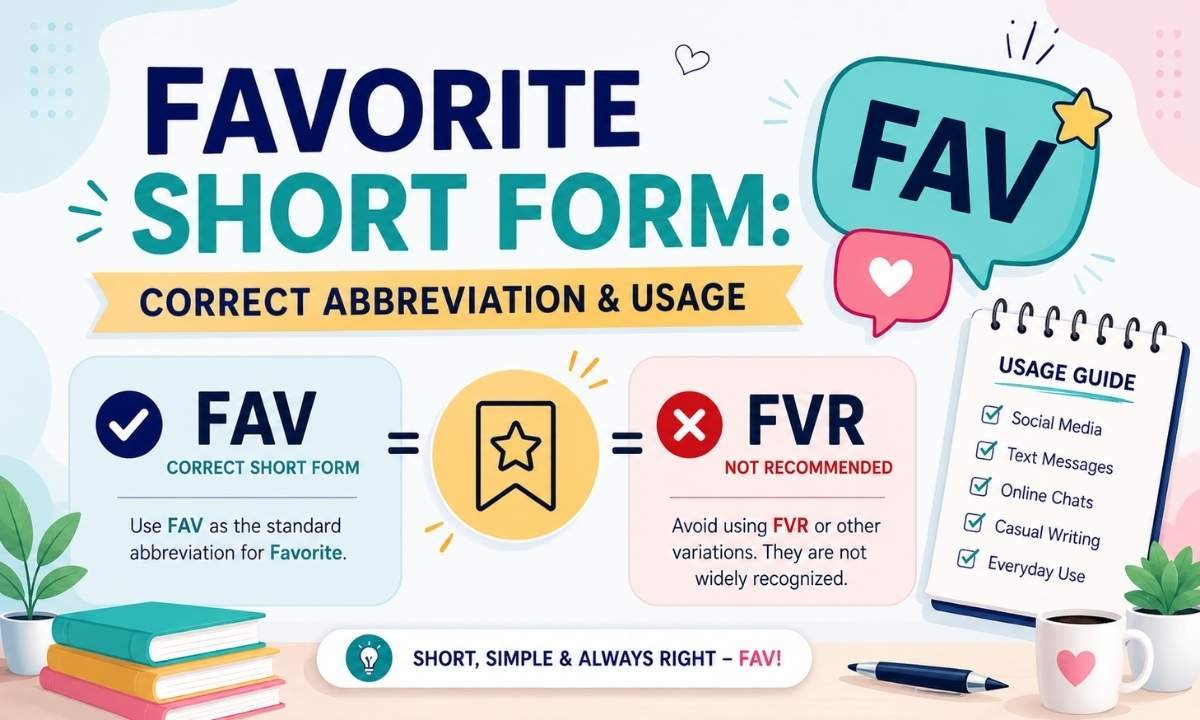
Texting a friend about your favorite song and wondering whether to type “fav” or “fave”? You are not alone. Millions of people search for the Favorite Short Form every month, and dictionaries do not always give a simple answer.
This guide breaks down the difference between fav and fave, shows real examples from texting and social media, and explains when to stick with the full word favorite. By the end, you will know exactly which short form fits your writing.
What Is the Short Form of Favorite?
Both “fav” and “fave” are accepted short forms of favorite. Fav is the clipped, four-letter version common in texting and hashtags, while fave is the slightly longer, more conversational spelling that mirrors the sound of the full word. Neither form belongs in formal writing, where favorite remains the standard choice.
- fav = casual, clipped short form of favorite
- fave = informal, conversational short form of favorite
- favorite = correct spelling for formal and professional writing
Merriam-Webster and Dictionary.com both recognize these shortened spellings as legitimate informal variants rather than typos.
Is Fav a Correct Short Form?
Yes, fav is a widely accepted informal shortening of favorite, especially in texts, captions, and casual chat.
Is Fave a Correct Short Form?
Yes, fave is equally accepted and is often described as the more natural-sounding of the two variants.
Fav vs Fave: What’s the Difference?
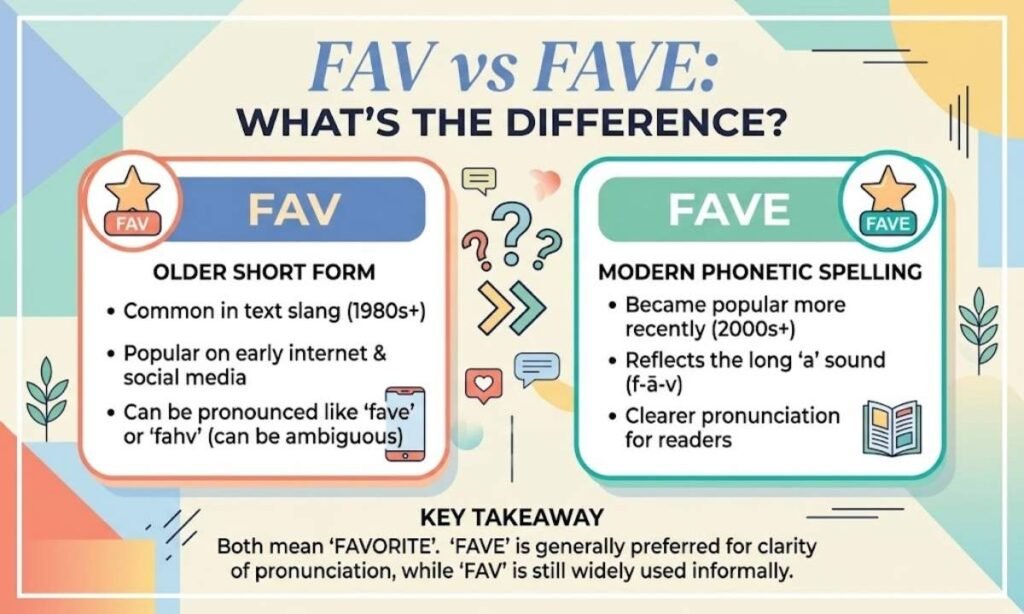
The core difference between fav and fave is spelling style, not meaning. Fave keeps the long “a” sound of favorite (rhyming with “wave”), while fav drops the silent e, which can lead readers to mispronounce it with a short “a” sound (rhyming with “have”). Both mean exactly the same thing.
| Feature | Fav | Fave |
| Pronunciation | Sometimes misread with short “a” | Matches favorite’s long “a” sound |
| Common platforms | Twitter/X, texting, hashtags | Instagram, casual blogs, conversation |
| Tone | Very casual, clipped | Casual but slightly softer |
| Dictionary status | Listed as a variant spelling | Has its own dictionary entry |
Neither spelling is technically “more correct” than the other. The choice usually comes down to personal habit and the platform you are writing on.
Where Did Fav and Fave Come From?
The short forms are older than most people assume. Language researchers trace fave back to the 1930s, when it appeared in entertainment and horse-racing writing to describe a favored contender or performer. Fav followed a similar path in horse-racing terminology before both spellings spread into everyday slang.
Social media accelerated their popularity. When platforms like Flickr, Twitter, and Tumblr introduced “favoriting” features in the mid-2000s, fav and fave turned into everyday verbs as well as nouns, giving rise to phrases like “faved that post” or “added to my favs.”
How Do You Abbreviate Favorite in Texting?
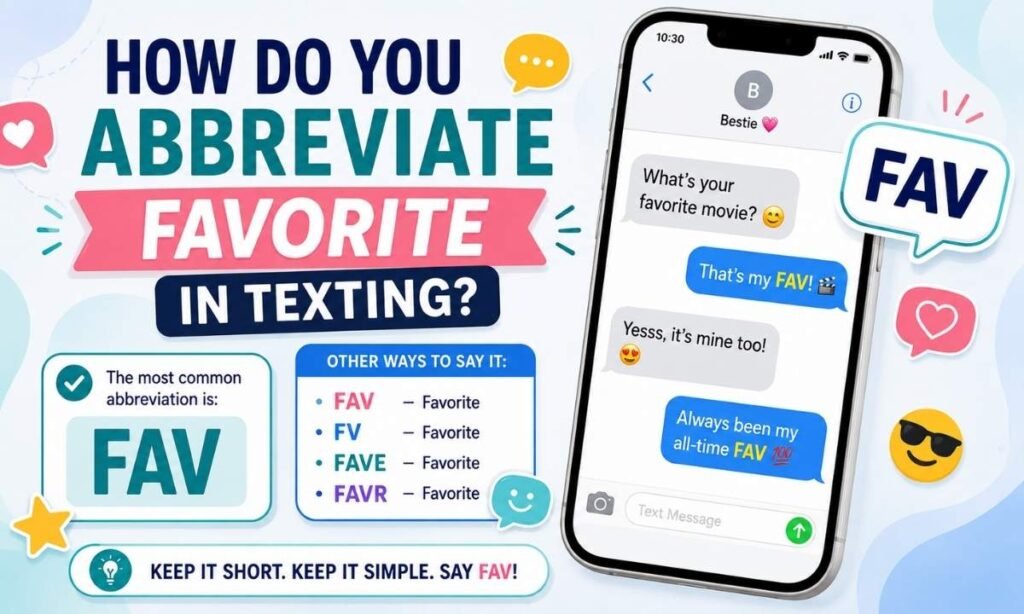
In texting and instant messaging, brevity matters more than formality, which is exactly why fav and fave thrive there. Both forms save keystrokes while staying instantly understandable to the reader.
- “That’s my fav song right now.”
- “What’s your fave movie of the year?”
- “This is my fav coffee shop.”
- “She’s one of my faves on the show.”
Texting culture rarely worries about which spelling is “correct.” Consistency within a single conversation matters more than picking a single official version.
Pronunciation Guide: How to Say Fav and Fave
Getting the sound right helps avoid confusion in speech. Fave is pronounced like the word “wave,” keeping the long vowel sound from favorite. Fav is technically ambiguous in writing, since readers unfamiliar with the term may pronounce it like the short vowel in “have” instead of matching a favorite’s sound.
- Fave: rhymes with wave, save, and cave
- Fav: often read to rhyme with have, though speakers intend the “wave” sound
This small pronunciation gap is one reason some writers prefer fave for clarity in spoken or read-aloud content.
What Is the Plural of Fav and Fave?
The plural forms follow standard English pluralization rules. Fav becomes favs, and fave becomes faves. Both plural spellings appear in casual writing, though faves show up more often in mainstream style guides and dictionary listings.
| Singular | Plural | Example Sentence |
| fav | favs | “These are my top favs this month.” |
| fave | faves | “She shared her faves from the playlist.” |
“My faves” and “my favs” both work in casual writing, social captions, and text threads. Pick one and stay consistent throughout a single piece of content.
Favorite vs Favourite: Which Spelling Should You Use?
Favorite is the standard American English spelling, while favourite is the British English version, following the same pattern as color versus colour. For a US-based audience, favorite is the correct choice in every formal and most informal contexts.
- American English: favorite, fav, fave
- British English: favourite, fav, fave
The short forms fav and fave stay identical across both dialects, since the shortening removes the letters that differ between American and British spelling.
Is Fav or Fave Formal or Informal?
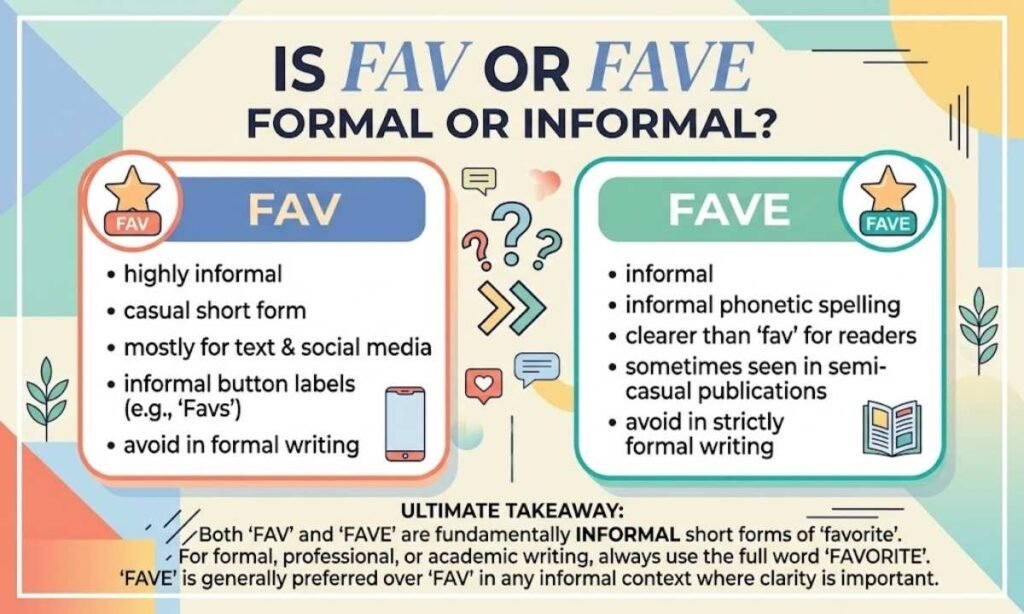
Both fav and fave are informal by nature and do not belong in resumes, academic papers, business emails, or professional reports. Reserve the full word favorite for any writing where credibility and polish matter.
Use favorite instead of fav or fave when writing:
- Academic essays and research papers
- Business emails and professional reports
- Resumes, cover letters, and LinkedIn summaries
- Legal or official documents
How to Use Fav and Fave in a Sentence Correctly?
Fav and fave can function as nouns, adjectives, and even informal verbs. As a noun, they replace “favorite thing”: “pizza is my fav.” As an adjective, they modify a noun directly: “my fave restaurant just reopened.” As a verb, especially on social platforms, they describe the act of marking something as liked: “I faved your post.”
Keep the usage casual and conversational. Mixing fav or fave into an otherwise formal sentence usually looks out of place and can weaken the tone of professional writing.
Fav and Fave in Branding and Marketing Copy
Many consumer brands intentionally use fav or fave in ad copy, app notifications, and social captions because the short form feels friendly and approachable. Retail apps often use lines like “Save it to your favs” or “Add to faves” inside shopping features, matching the casual voice younger audiences expect.
Marketers should still test both spellings with their specific audience, since regional habits and platform culture can shift which version performs better in click-through rates and engagement.
Common Mistakes When Shortening Favorite
Writers often stumble on a few predictable issues when using these short forms. Avoiding them keeps writing clean and professional.
- Using fav or fave in formal documents or academic work
- Switching between fav and fave within the same piece of content
- Treating favs and faves as fully standardized dictionary words
- Mixing American favorite with British favourite in one article
- Forgetting the apostrophe in the possessive form “favorite’s”
Quick Guide: Fav, Fave, Favs, and Faves
Here is a condensed reference for quick scanning.
| Word | Meaning | Example |
| fav | favorite | “My fav color is blue.” |
| fave | favorite | “My favorite movie is a classic.” |
| favs | favorites | “Check out my top favs.” |
| faves | favorites | “These songs are all my faves.” |
Final Verdict: Fav or Fave, Which Should You Pick?
If you want the spelling that matches the pronunciation of favorite, choose fave. If you prefer the shortest possible form for texting, hashtags, or character-limited captions, fav works just as well. Neither choice is wrong, and both are widely understood across American English audiences.
For any writing meant to look polished, professional, or academic, skip both short forms and use favorite instead.
Frequently Asked Questions
What is the short form for favorite?
The two accepted short forms are fav and fave, both used informally in place of favorite.
Is fav short for favorite?
Yes, fav is a casual, clipped short form of favorite commonly used in texting.
Is fave short for favorite?
Yes, fave is an informal short form of favorite that matches its long “a” pronunciation.
Is fav or fave more correct?
Neither is more correct; both are accepted informal spellings, and the choice is a matter of style.
What is the plural of fav and fave?
The plurals are favs and faves, both meaning “favorites” in casual writing.
Can I use fav or fave in formal writing?
No, formal, academic, and professional writing should always use the full word favorite.
Is favorite abbreviated as FAV in American English?
Yes, FAV is a recognized informal abbreviation of favorite in American English, alongside fave.
Conclusion
Fav and fave both work as informal short forms of favorite, and neither spelling outranks the other in everyday casual writing. The real rule to remember is context: use fav or fave in texts, captions, and conversation, and switch back to the full word favorite whenever your writing needs to sound formal or professional.