
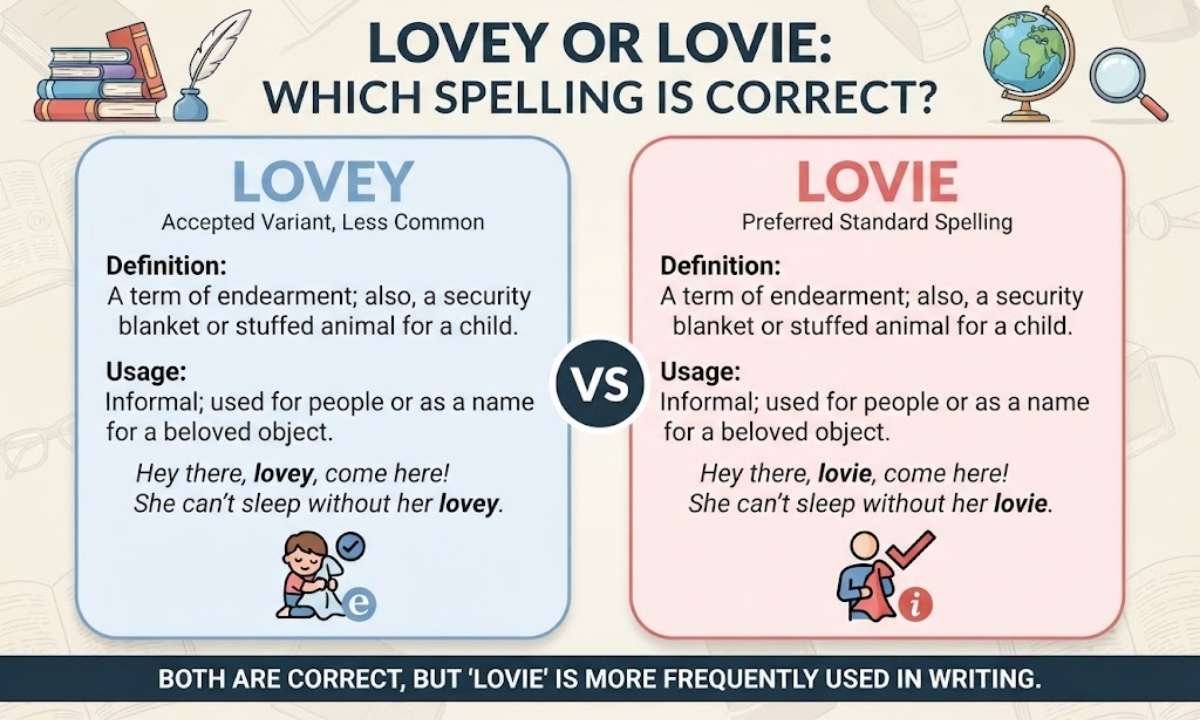
Lovey is the spelling dictionaries list, and it is the safer choice for both of its main meanings: an affectionate term for someone you care about, and a child’s comfort blanket or stuffed toy. Lovie is not always a typo, though. It appears as an informal variant, a pet name, and even a given name.
This guide explains what each word means, how they differ, and how to pronounce them. You will also find real examples, tips for formal writing, and a quick usage table so you can pick the right spelling in seconds. Whether you are texting a partner or shopping for a baby gift, the answer is simple.
Lovey or Lovie: Which One Is Correct?
Lovey is the standard, dictionary listed spelling. Use it for a term of endearment and for a child’s comfort object. Lovie is an informal variant that also works as a nickname or a person’s name, so it is not automatically wrong.
For general writing, choose lovey. If someone signs their name or nickname as Lovie, keep their spelling.
What Does “Lovey” Mean?
Lovey as a Term of Endearment
As a term of endearment, lovey means sweetheart, darling, or dear. Dictionaries label it informal, and several mark it as British English. It sounds warm and casual, and people usually say it to someone close.
• “Are you warm enough, lovey?”
• “Thanks for helping me today, lovey.”
• “Come here, lovey, and give me a hug.”
Lovey as a Child’s Comfort Object
In American English, a lovey is a small blanket, stuffed animal, or plush toy that a baby or toddler holds for comfort. Parents like the word because it sounds gentle and is easy to say. This meaning is a big reason the word appears so often in parenting conversations and baby product guides.
Other Dictionary Uses of “Lovey”
In British English, lovey is simply a friendly way to address someone. A related word, luvvie, is sometimes used humorously for an actor and can sound mocking. That sense is rare and separate from everyday lovey usage.
What Does “Lovie” Mean?
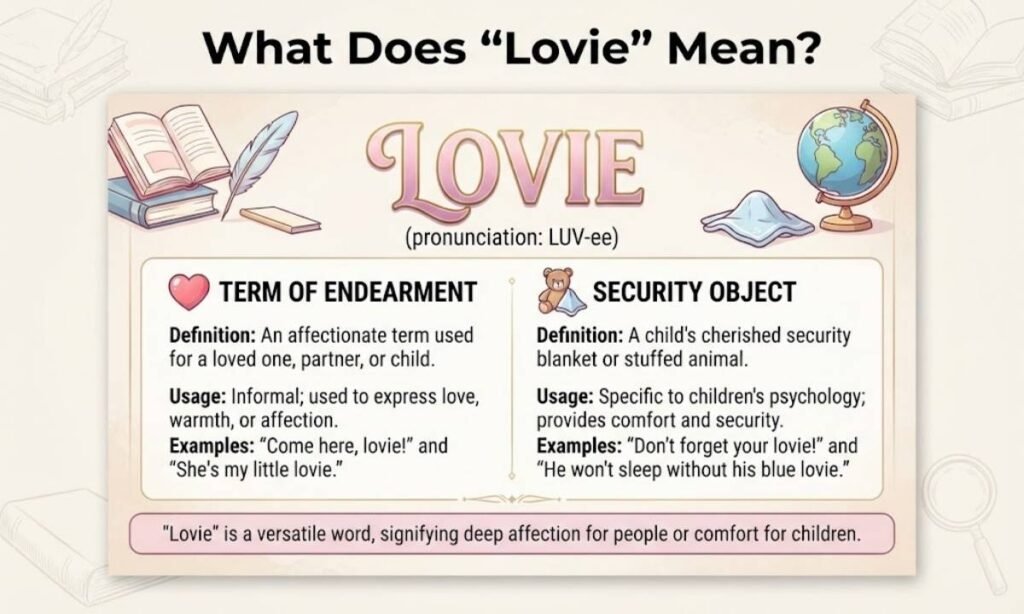
Lovie as an Affectionate Nickname
Lovie works as a pet name between partners, relatives, and close friends. It feels personal and playful, and it often shows up in texts and captions. Because it is informal, tone matters more than spelling rules.
Lovie as a Personal or Given Name
Some people are actually named Lovie, or they choose it as a nickname. In that case it is a name, not a pet name used for someone else. Always use the spelling the person prefers.
Is “Lovie” a Real Word?
Yes, in the informal sense. Some dictionaries, including Wiktionary, list lovie as an alternative form of lovey and luvvy. Many standard dictionaries place the main entry under lovey, so lovie reads as a variant rather than the headword.
That means seeing lovie does not automatically signal a spelling mistake. The writer may be using a nickname, a name, or a casual style.
Lovey vs. Lovie: What Is the Difference?
Meaning and Usage Compared
| Feature | Lovey | Lovie |
| Term of endearment | Yes, established spelling | Yes, informal variant |
| Child’s comfort object | Yes, common in US usage | Rare, usually spelled lovey |
| Personal nickname | Common | Common |
| Given name | Uncommon | Yes |
| Tone | Informal | Informal and personal |
Which Spelling Is More Standard?
Lovey is. It has the dictionary entries and the established comfort object meaning. Choose it for articles, product pages, parenting guides, and any writing aimed at a wide audience.
Are Lovey and Lovie Pronounced the Same?
Yes. Both sound like LUH-vee. Because the sounds match, writers often guess the spelling by ear, and both the y ending and the ie ending look natural. That overlap is the main source of the confusion.
When Should You Use “Lovey”?
Use Lovey for a Child’s Comfort Object
Any time you mean a baby’s blanket or plush toy, lovey is the word to write.
• “My daughter will not nap without her lovey.”
• “We packed two loveys in case one gets lost.”
• “Wash the lovey weekly so it stays fresh.”
Use Lovey as a Term of Affection
Lovey suits a partner, child, friend, or older relative you speak to warmly.
• “Did you sleep well, lovey?” (to a partner)
• “You did great today, lovey.” (to a child)
• “Thanks for the call, lovey.” (to a friend)
Use Lovey When You Want the More Standard Spelling
In blog posts, captions, and explanatory writing, lovey removes doubt. Readers recognize it right away, and no one will wonder whether you made an error.
When Can You Use “Lovie”?
Lovie in Text Messages and Casual Chats
Texting is relaxed, so lovie fits naturally. It looks friendly on a screen and feels more like a personal nickname than a dictionary word.
• “Goodnight, lovie.”
• “Did you eat yet, lovie?”
Lovie as a Romantic or Personal Nickname
Couples often customize their pet names, and lovie gives the word a slightly different look. If both of you like it, that is all the rule you need. Just keep it for private or casual settings.
Lovie When It Is Someone’s Preferred Name or Spelling
If a person writes Lovie as their name or handle, do not correct it to lovey. A chosen spelling is part of their identity, not an error to fix.
Lovey or Lovie in Real-Life Examples
Examples for Romantic Relationships
• “Good morning, lovey.”
• “I miss you, lovie.”
• “Save me a seat, lovey, I am running late.”
Examples for Friends and Family
• “Sit down, lovey, dinner is ready.” (a grandparent)
• “Thanks for the ride, lovie.” (a friend)
Examples for Babies and Parenting
• “Her lovey is a small cotton bunny.”
• “Tuck the lovey in beside him.”
• “Choose a lovey that is safe and easy to wash.”
Examples in Texting and Social Media
• “Happy birthday, lovey! Hope it is perfect.”
• “Miss you, lovie. Call me later.”
Lovey or Lovie in Formal and Professional Writing
Why Both Are Usually Too Informal for Professional Communication
Neither word is grammatically wrong. The issue is register. Pet names signal closeness, and in a workplace email or an academic paper that closeness can sound unprofessional or even disrespectful.
Better Alternatives for Formal Writing
• Use the person’s name: “Dear Ms. Carter” or “Hello Sam.”
• Use a neutral greeting: “Hello team” or “Good morning, everyone.”
• Save sweetheart and dear for personal cards and private messages.
Common Mistakes With Lovey and Lovie
Assuming Lovie Is Always Incorrect
Lovie is a recognized informal variant and a real given name. Calling it an error ignores both uses.
Assuming Lovey and Lovie Always Have Identical Meanings
They overlap as terms of endearment, but the comfort object meaning belongs to lovey. If you are writing about a baby’s blanket, lovie will look unusual.
Using a Term of Endearment in the Wrong Context
Calling a coworker, client, or teacher lovey can feel patronizing. Match the word to the relationship and the setting.
Quick Lovey vs. Lovie Usage Guide
| Context | Best Choice | Why | Example |
| Baby comfort blanket or toy | Lovey | Established spelling for this meaning | “Pack her lovey for the trip.” |
| General writing or blog content | Lovey | Standard dictionary form | “Lovey is a sweet nickname.” |
| Casual text to a partner | Either | Both read as affectionate | “Goodnight, lovie.” |
| Someone’s name or handle | Their spelling | Respects personal choice | “Thanks, Lovie.” |
| Formal email or report | Neither | Pet names are too informal | “Dear Ms. Carter,” |
Frequently Asked Questions
Is Lovey or Lovie Correct?
Lovey is the standard spelling. Lovie is an accepted informal variant and a name.
Is Lovie a Real Word?
Yes, as an informal variant of lovey and as a given name. Standard dictionaries usually list the main entry under lovey.
What Does Lovey Mean?
Lovey is a term of endearment meaning sweetheart or dear. It also names a child’s comfort blanket or stuffed toy.
Are Lovey and Lovie Pronounced the Same?
Yes, both are pronounced LUH-vee. Only the spelling differs.
Can I Use Lovie as a Nickname?
Yes. It works well as a casual or romantic nickname, especially in texts and private chats.
Can You Call Your Boyfriend or Girlfriend Lovey?
Yes, if you both like it. Lovey is a gentle, familiar pet name for a partner.
What Is a Lovey for a Baby?
It is a small blanket or plush toy a baby holds for comfort. Many toddlers keep one for sleep and travel.
Conclusion
Lovey is the established spelling for both affection and comfort objects, which makes it the best default. Lovie is a valid informal variant and a real name, so treat it with respect when someone chooses it.
Pick lovey for parenting topics and general writing, use either one in warm personal messages, and skip both in formal communication. When in doubt, match the spelling to the person and the setting.