

Most people pause at least once while typing this word, and the doubt is completely normal. Refer or Reffer is a common spelling question. The base verb looks simple, but once you add an ending like -ing or -ed, the spelling suddenly feels uncertain, and that hesitation is exactly why so many writers search for an answer online.
The short version is this: refer is correct, and reffer is not a standard English word. This Refer or Reffer guide breaks down the meaning, the doubling rule behind referred and referring, common mix-ups with referral and reference, and enough real examples to make the spelling stick for good.
The Quick Answer: Refer Is Correct
Refer is the only accepted spelling of this verb in both American and British English. Reffer, with a double f, does not appear in any standard dictionary and is treated as a spelling error in schoolwork, business writing, and published content alike.
The confusion usually starts with pronunciation. When people say the word aloud, the stress on the second syllable can make a doubled letter feel natural, so the brain reaches for reffer instead of refer. English spelling, though, does not always match the way a word sounds, and this is one of those cases where the ear misleads the hand.
What Does Refer Actually Mean?

At its core, refer describes the act of directing attention toward something else. Depending on context, it can mean:
- To mention or bring up a topic in conversation or writing
- To direct someone toward a person, department, or resource
- To consult a document, note, or source for information
- To send a person to another professional for further help
A teacher might refer a student to extra reading material, a manager might refer a customer to a different team, and a doctor might refer a patient to a specialist. The word shows up constantly across academic, professional, medical, and everyday English, which is part of why getting the spelling right matters so much.
Refer in Simple Sentences
- Please refer to the manual before installing the software.
- I will refer you to someone who can help with billing.
- She referred to last quarter’s report during the presentation.
Why Reffer Feels Right? (But Isn’t)
Language learners and native speakers alike run into this trap for a predictable reason: English does double consonants in many verb forms, so the instinct to double a letter here isn’t unreasonable. The mistake is doubling the wrong letter. Writers double the f instead of the r, producing reffer, reffered, or reffering, none of which are recognized spellings.
Autocorrect tools, texting habits, and rushed typing all add to the problem, since a quick double-tap of a key is an easy slip to make and an easy one to miss when proofreading.
The Doubling Rule Explained Simply
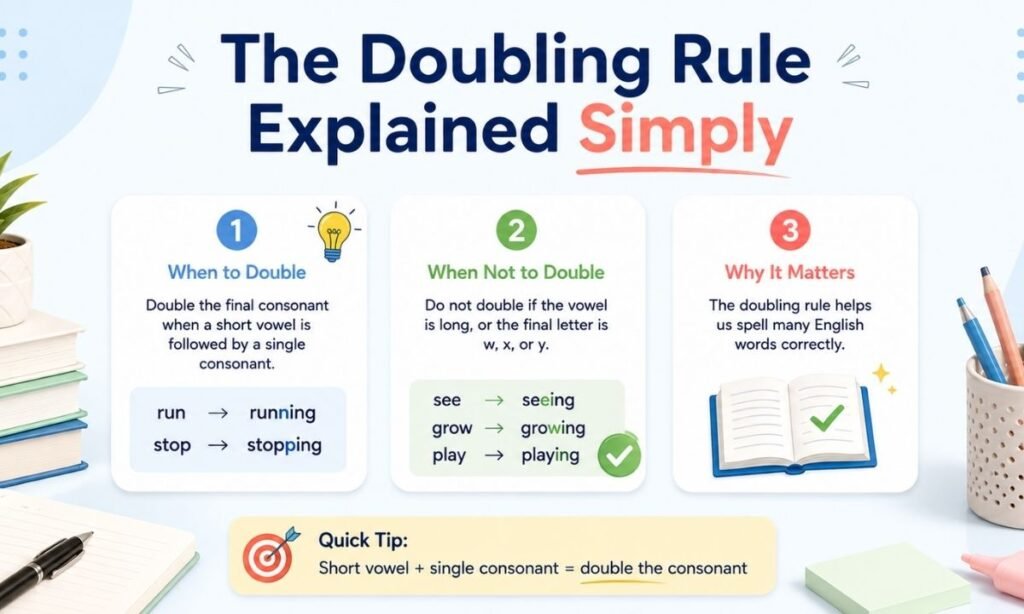
Refer follows a well-known pattern in English spelling called the doubling rule, which applies to many two-syllable verbs stressed on the final syllable.
Here’s how it works, step by step:
- Identify the last syllable and check if it carries the stress. In refer, the stress falls on “-fer,” not “re-.”
- Check the ending pattern. The verb ends in a single vowel followed by a single consonant (e-r).
- Because the stress lands on that final syllable, the last consonant doubles before adding a suffix that starts with a vowel, such as -ed or -ing.
That’s why the r doubles in referred and referring, while the base form refer and the third-person form refers keep a single r and a single f throughout.
Refer, Referred, Referring: A Quick Verb Chart
| Verb Form | Correct Spelling | Example Sentence |
| Base form | refer | Please refer to page ten. |
| Present tense (he/she/it) | refers | He refers to his notes often. |
| Past tense / past participle | referred | The nurse referred him to a cardiologist. |
| Present participle / gerund | referring | They are referring to last month’s data. |
| Incorrect form | reffer | Not a real word |
| Incorrect form | reffered | Not a real word |
| Incorrect form | reffering | Not a real word |
Also Read This: Focuses or Focusses: Which Spelling Is Actually Correct?
Refer vs Referral vs Reference
These three words share a root but serve different grammatical jobs, and mixing them up is nearly as common as misspelling refer itself.
| Word | Part of Speech | Meaning | Example |
| Refer | Verb | To direct attention or send someone elsewhere | Please refer to the attached file. |
| Referral | Noun | The act or document created when someone is directed elsewhere | The clinic requires a referral before your visit. |
| Reference | Noun | A source, citation, or mention used for support | Add this book as a reference in your essay. |
A simple way to remember the difference: refer is the action, a referral is the outcome or paperwork, and a reference is the source material itself.
How to Use Refer Correctly in Different Contexts?

Refer To Something
This is the most common pattern, used when pointing someone toward information. Example: Refer to the appendix for full details.
Refer Someone To Someone Else
Here, refer connects two people, often in professional or medical settings. Example: The lawyer referred her client to a tax specialist.
Refer Back To
Used when returning attention to something already discussed. Example: Let’s refer back to the earlier point about pricing.
Refer A Friend
Common in marketing and customer programs, where refer means to recommend a product or service to someone else. Example: Refer a friend and earn a discount on your next order.
Real-World Examples of Refer in Everyday Use
In academic writing: Students are often asked to refer to at least three sources when writing a research paper, and professors frequently refer students to the university writing center for extra support.
In the workplace: Employees might refer a colleague to HR for a policy question, while a manager may refer to last year’s figures during a budget meeting.
In healthcare: A general physician often refers patients to specialists, and clinics keep detailed referral records to track where each patient was sent.
In casual conversation: People commonly say things like “I was referring to the movie we watched last week,” a natural, everyday use of the present participle form.
Common Spelling Mistakes to Avoid
- Reffer instead of refer — incorrect in every context
- Reffered instead of referred — a frequent typing error
- Refering instead of referring — missing the second r entirely
- Reffering instead of referring — doubling the wrong letter
Proofreading tools catch most of these automatically, but understanding the rule means you won’t need to rely on spellcheck every time.
American vs British English: Any Difference?

There is no regional variation here. Refer, referred, and referring are spelled identically in American English, British English, Australian English, and every other major English dialect. This consistency refers to one of the more predictable irregular verbs once the doubling rule clicks into place.
Also Read This: Faring vs Fairing: The Complete Guide to Using Each Word Correctly
A Simple Memory Trick
Keep this short rule in mind: refer has one f, one r. Referred and referring to double the r, never the f. If you picture the word “prefer,” which follows the exact same pattern as preferred and preferring, the logic becomes even easier to remember, since both words share the same Latin root and the same stress pattern.
Synonyms Worth Knowing
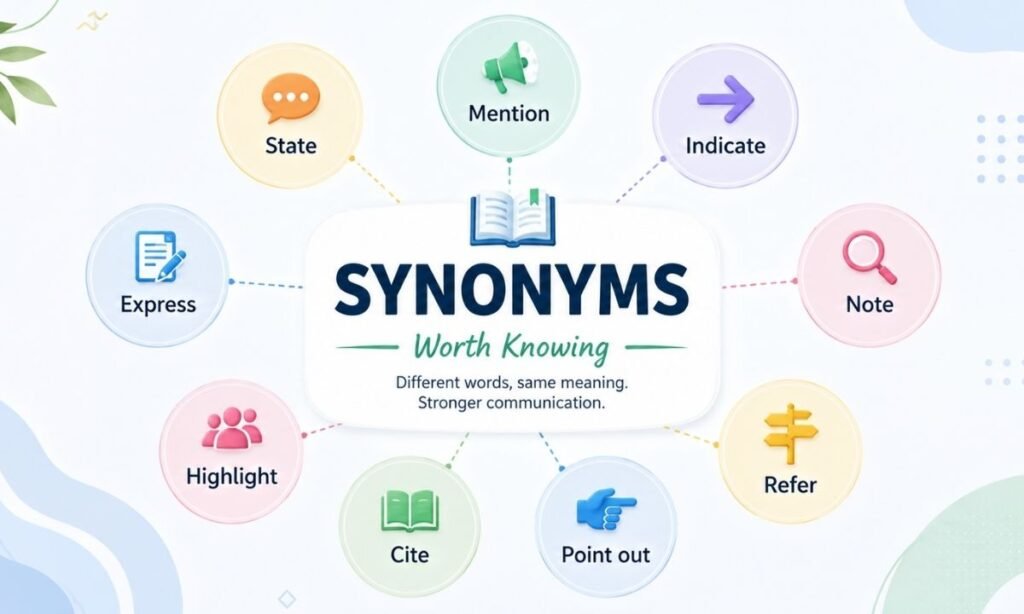
Depending on context, refer can often be replaced with:
- Mention
- Cite
- Point to
- Direct
- Consult
- Recommend
Choosing the right synonym depends on tone. Cite works well in academic writing, direct fits professional and medical contexts, and mentions casual conversation.
Frequently Asked Questions
Is it refer or reffer?
Refer is correct. Reffer is not a recognized spelling in any English dictionary.
Is reffer ever a real word?
No, reffer has never been accepted as standard English in any context or dialect.
What is the past tense of refer?
The past tense is referred, spelled with a single f and a doubled r.
Why does referred have two r’s?
Because refer is stressed on its final syllable, the last consonant doubles before adding -ed.
Is referring spelled with two r’s?
Yes, referring doubles the r for the same reason referred does, following standard English doubling rules.
What’s the difference between refer and reference?
Refer is a verb describing an action, while reference is a noun describing a source or citation.
What’s the difference between refer and referral?
Refer is the verb form, while referral is the noun describing the result of referring to someone.
Conclusion
Refer is always correct, and reffer is always a mistake, regardless of tense, region, or context. The only real complexity is remembering that the r doubles in referred and referring, while the base form keeps a single f and a single r throughout.
Once that one rule is memorized, this word stops being a source of hesitation in any kind of writing, from a quick text message to a formal academic paper.